Leak protection built for Panhandle rental condos.
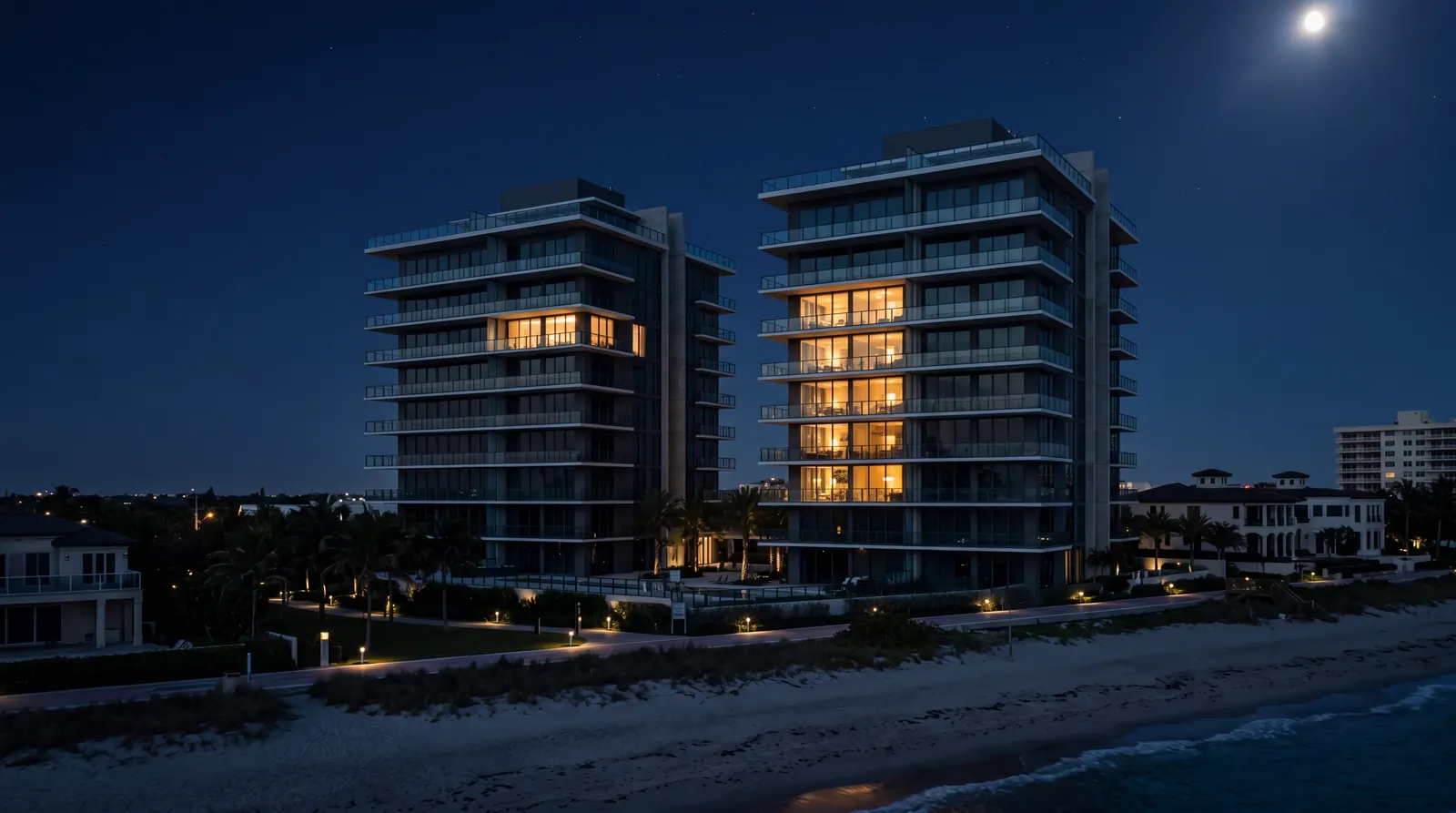
Halo detected a leak in Unit 1404, under the washer, and shut off the water.
"Hi, this is the guest in 1404. There's water coming through the ceiling and nobody's answering at the front desk. We check out tomorrow."
Building-wide coverage
Every unit, every floor, common areas and mechanical rooms.
24/7 phone support
Owners, guests, and staff all call one number: 844-873-4256.
Real-time alerts
The right person gets the alert with the exact unit, room, and placement.
Wireless and long-lasting
Up to 10-year sensor battery life. Retrofit-friendly, no resident Wi-Fi needed.
Installed and serviced in Florida condominium communities since 2015






Guests who check out in three days
On any given night in a Destin or Panama City Beach tower, most people in the building have never been there before. They don't know where the water shutoff is — and they're gone before anyone notices the drip.
Sensors detect water the moment it appears. Valves close automatically. Any occupant — owner, guest, or rental manager — calls one number to reach someone who can see the building's system status live.
Vacant units between bookings
Between check-out and check-in, units sit empty with nobody to notice a leak. One failed washer hose can flood two floors before the next guest arrives.
Sensors and shutoff valves operate automatically whether the unit is occupied or not. Device health for every unit is visible from the portal year-round.
Proven in the Panhandle since 2015
Southwinds I, II & III in Miramar Beach. One Water Place in Destin, where Halo identified a construction defect wasting an estimated 1.2 million gallons per year. The Grand in Sandestin. Mirabella and La Riva East and West.
When Hurricane Sally hit in September 2020, Halo-protected communities had building-wide water control as the storm came ashore — management confirmed valve status from one screen, from anywhere.
For Gulf Coast properties
A rental turnover problem needs a building-wide answer.
Panhandle condominiums in Destin, Miramar Beach, Sandestin, and along 30A often operate more like hospitality properties than traditional owner-occupied buildings. A cleaner, guest, or property manager may be the first person to notice a wet floor, while the owner is hours away. Halo gives that first observer a clear path to help and gives the board a record of what happened.
The installation approach fits existing Gulf Coast buildings: wireless sensors in units and common areas, a private long-range network, and automatic valves at the unit supply. It does not require guest Wi-Fi or a wall-opening project. That matters in a rental-heavy tower where access must be scheduled between stays and a small leak can become a multi-unit cleanup before the next check-in.
Guest-ready response
One phone number for guests, owners, and rental staff at any hour.
Storm awareness
Confirm valve status when a tropical system is approaching the coast.
Local track record
Coverage includes named communities in Miramar Beach, Destin, and Sandestin.
Protection for rental-heavy buildings
Detect the leak between check-out and check-in. Give the next person a system that knows what to do.
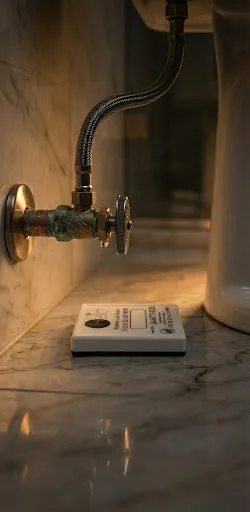
Detect and respond
Place sensors where guests, cleaners, and maintenance teams are most likely to find water first.
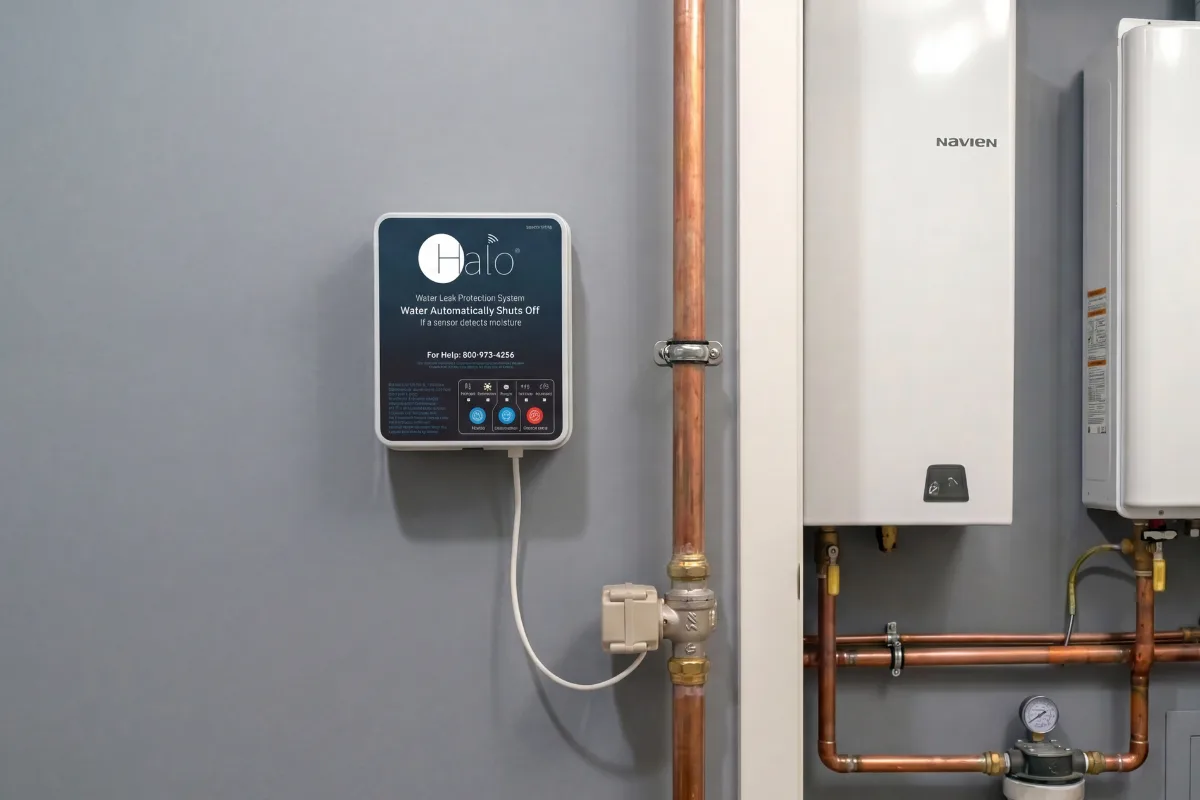
Instant action
Isolate the affected rental unit without taking water service away from the rest of the tower.

Keep everyone informed
Route a clear unit-and-room alert to the people managing the property, then preserve the incident record.
Halo adapts to fit the needs of your community

Move from hidden leaks to early, room-level response
Get a precise alert across every unit and floor the moment water appears, so your team responds faster and damage is contained before it spreads.
Faster response
Pinpoint the exact unit, room, and sensor in seconds
Automatic shutoff
Close the affected unit's supply line without waiting for staff
Audit-ready history
Every alert and status change is logged in the portal
Get protected in about a week
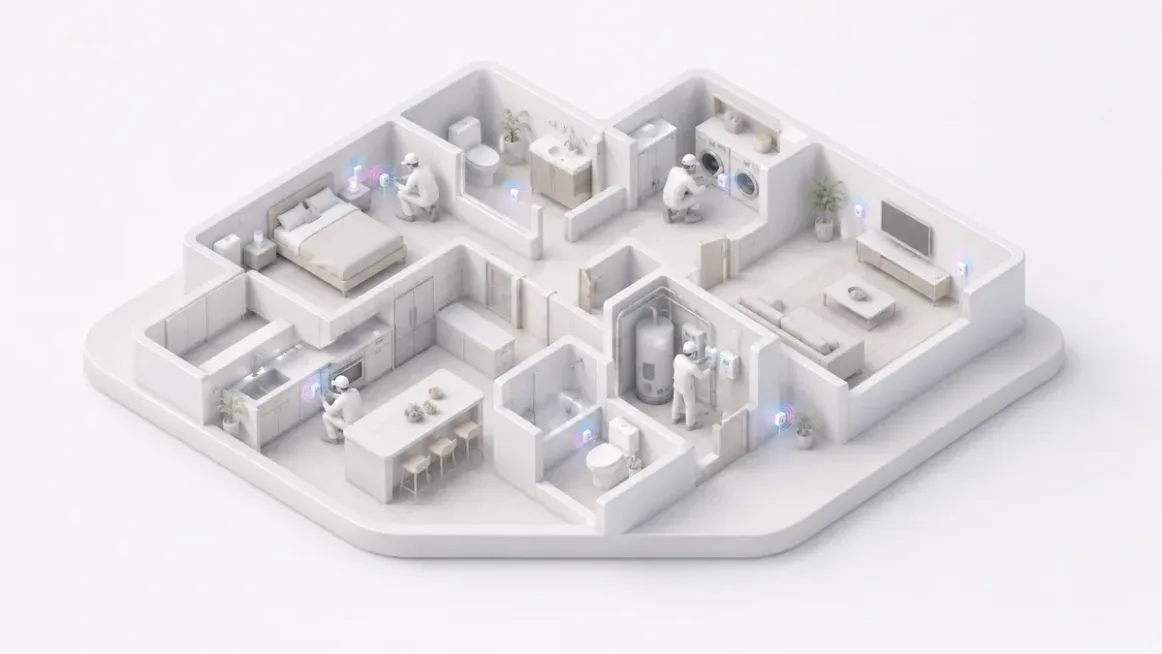
Install Halo network
Technicians set up a long-range wireless network to connect Halo devices property-wide and install sensors in common areas.
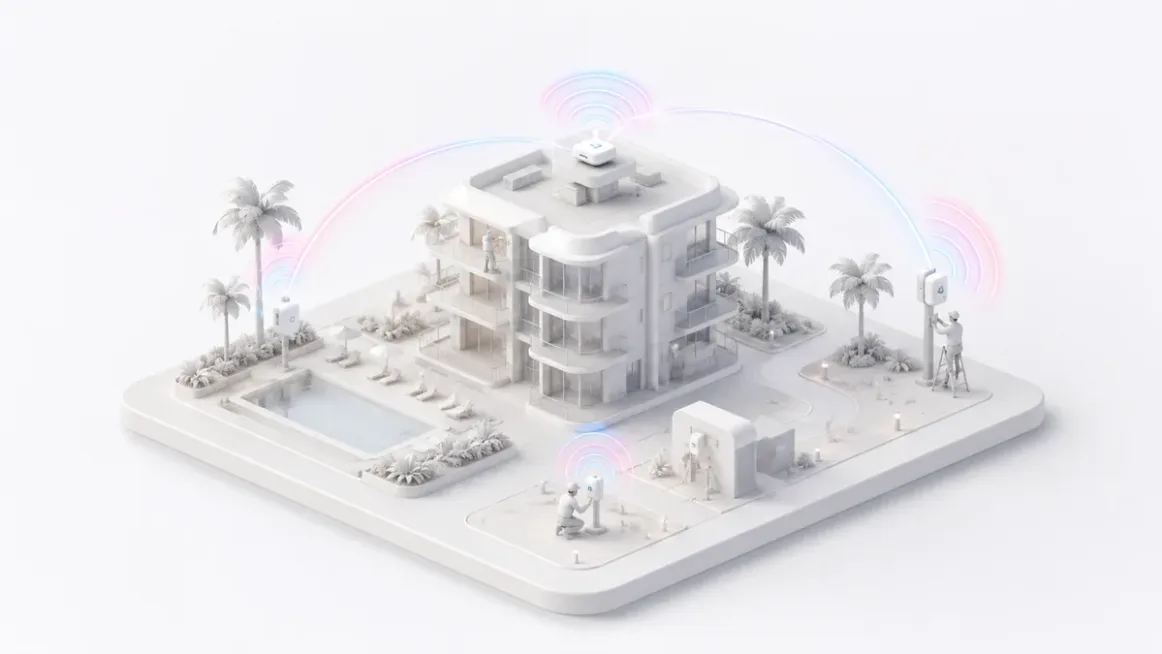
In-unit installation
Technicians visit each unit to install leak sensors and optional shut-off controls. Each visit typically takes 15–20 minutes, with teams completing about 20–30 units per day. Units that cannot be accessed are logged for follow-up.
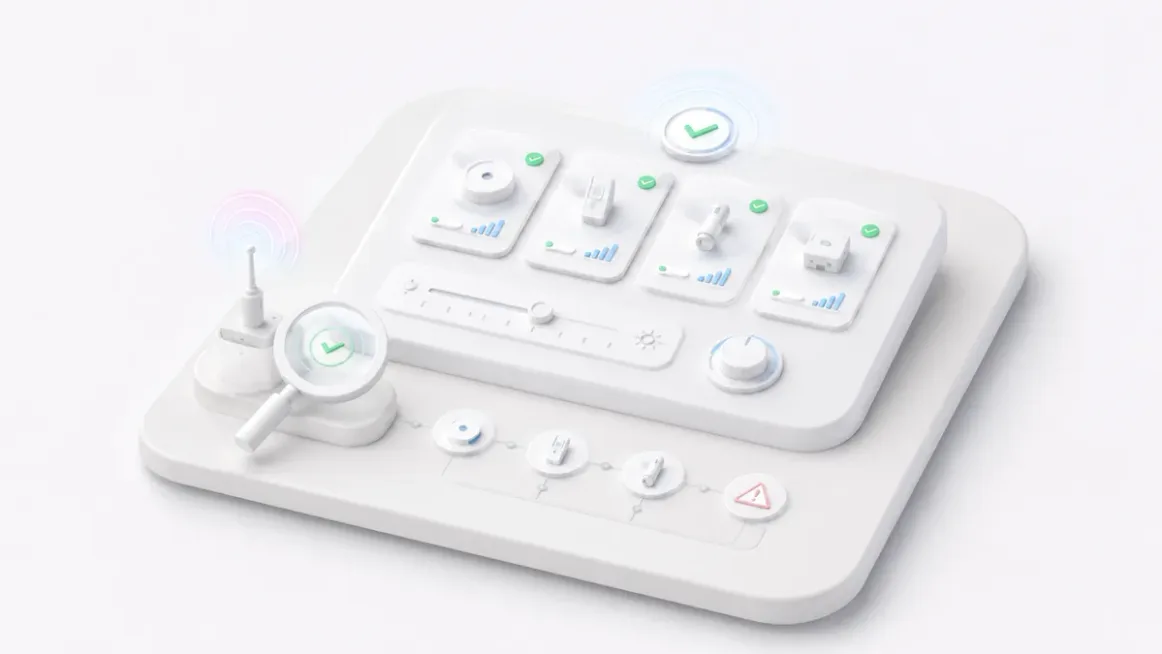
System validation
We confirm devices are checking in, adjust sensitivities, and resolve exceptions. We also catch up on any units missed earlier.
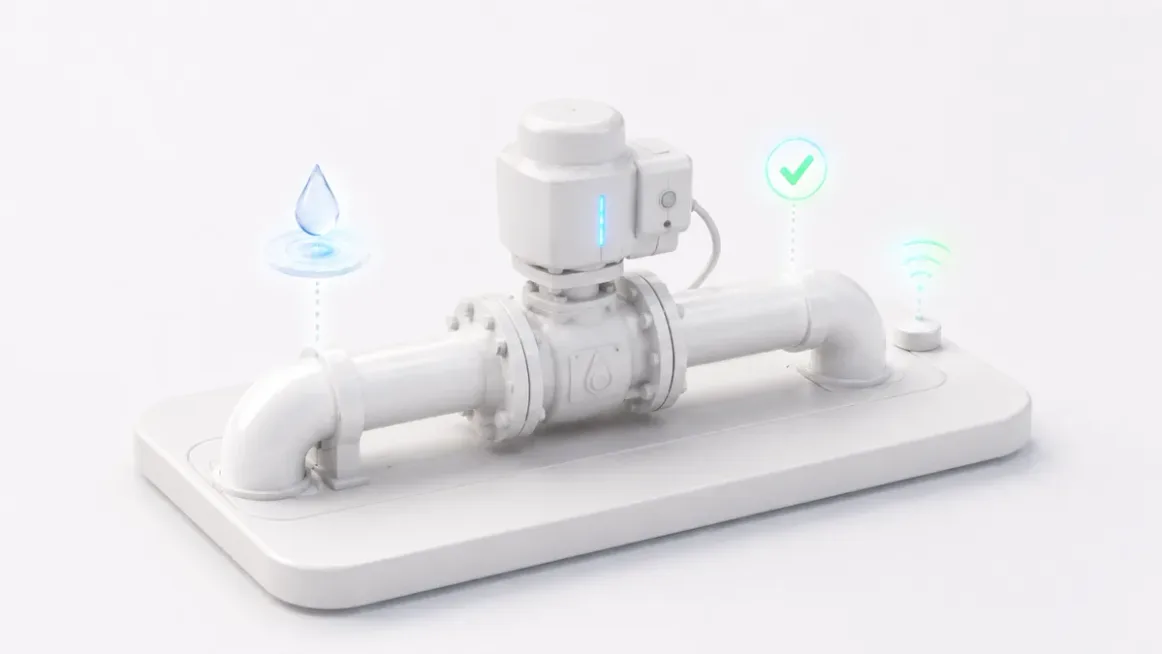
Plumbing
A plumber installs valve bodies while technicians verify signal quality across the property. We finish with staff training, a final walkthrough, and handoff to your team.
FAQ
Who do guests call if a leak starts at night?
The 24/7 Halo Response Center at 844-873-4256. Any occupant — owner, guest, or rental manager — can call, and the responder can see the building's system status live. No app or account needed.
Does the system work when a unit is vacant between bookings?
Yes. Sensors and shutoff valves operate automatically whether the unit is occupied or not, and device health is visible from the portal year-round.
Will a leak in one unit shut off water to the whole building?
No. Halo closes the valve to the specific unit where water was detected, isolating the damage without disrupting service to the rest of the building.
Has Halo been used in Panhandle communities?
Yes. Halo has protected Panhandle condominiums since 2015, including Southwinds I, II & III in Miramar Beach, One Water Place in Destin, and The Grand in Sandestin.